Oversight
The inhabitants of the Noto Peninsula have been struggling in keeping traditions alive since the beginning of industrialisation in Japan. On that remote land, farmers and craftsmen have been perpetuating the wisdom of centuries old practices. No machine can replace the fine work of fine wood carving and lacquer, nor make the taste of the rice better than the one naturally dried on wooden structures. Neither the quality of the sea salt harvested using methods or charcoal used for tea ceremony.
If it wasn’t for the recent decline of population in the Japanese coutryside, a trip in the Noto peninsula could have been compared to a trip in the past. Unfortuately, farmers and craftmen struggle in transmitting their wisdom to the new generations, leading to big changes in the area landscaping. Subbed as Satoumi (sea communities) and Satoyama (mountain communities) land, those features are on the way to disparition. Tourism can be seen as a new industry to save the local culture, but at the cost of potentialy sacrificing its authenticity.
Active Tourism
While Japan is getting lot of attention from foreign travelers, the Noto Peninsula is about to develope its tourism infrastuctures and attract more people. For that reason, I wanted to take my chance in developing sustainable tourism in the area, and trying to orientate tourism development to the right direction, through Active Tourism activities and take the time to enjoy this remote environment.
Active Tourism is defined as such:
The contrary of passive tourism. This travelling concept is also opposed to Mass Tourism in the sense that is small scale, low-impact, run and administrated locally. Active Tourism is socially and ecologically sustainable.
Active Tourism comprises Ecotourism in the sense of protection of Biodiversity and admiration of natural beauty. But Active Tourism not only values Nature, but it also aims to educate the human being, culturally and ecologically. The participation in mental activities and physical excercises is very important for enhancing our life experiencies. An active tourist tries to educate a good mind in a healthy body.
Why bicycle tours in Noto?
- Great variety of landscapes
- Beautifully preserved architecture
- A coastal road all around the Peninsula
- Little traffic as no cross road to other destinations
- Hilly but few long, steep climbs
- Many cultural attractions possible on the way
- Poor public transportation makes it hard to visit Noto
- Easily accessible from Kanazawa
Why choose HokRik Wheels?
- Real adventure, sportive bicycle tours rarely found in Japan
- Experienced bicycle tour leader
- Local guide acknowledgeable about the area and its culture
- Carefully selected courses for variety of sights and little traffic
- Tours adapt to the level of customers
- Private tours only, to avoid a big difference of level between participants
- High quality equipment, ware rental
- Quick support in case of trouble
About me
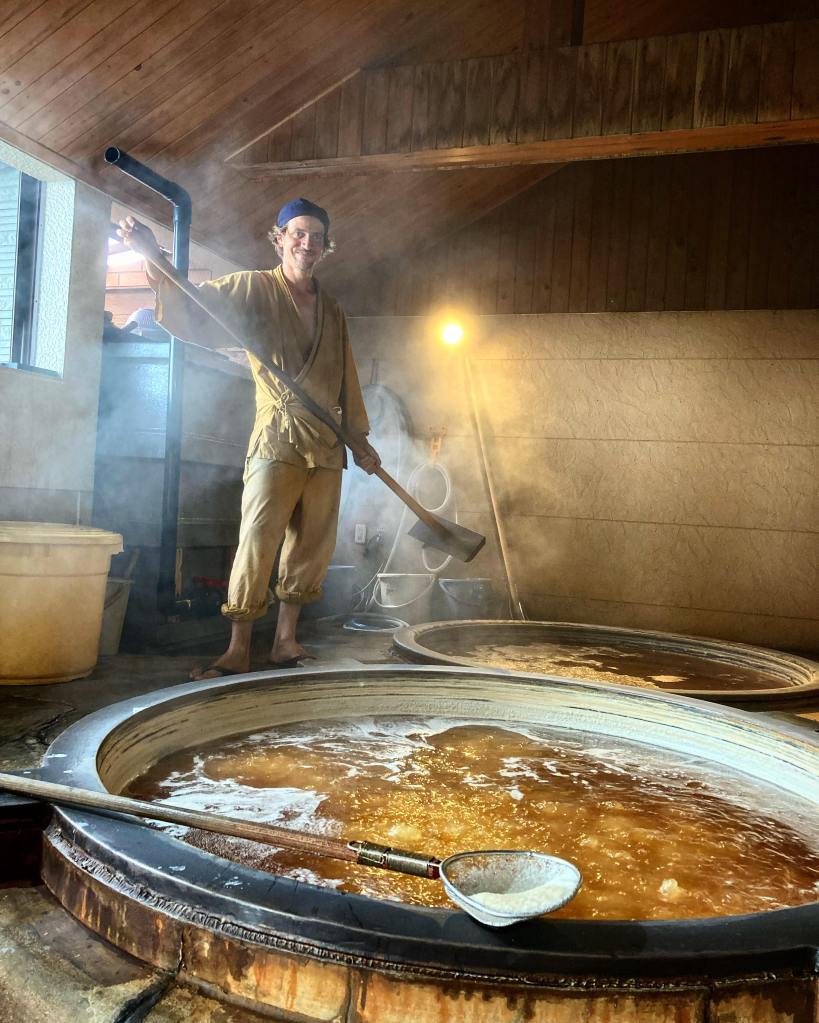
Romain Lebrun
Originally from Belgium, I settled in the Noto countryside in 2018, a village called Kanakura, after traveling all around Japan by bicycle. Kanakura is a great exemple of a traditional Satoyama, literally mountain village, where I have learned communal life with the local residents. Since the pandemic, I started working at Wajima Shio, a traditional salt farm, and am now on the way to replace the Kamashi, the « Toji » of the salt production. Through cycling tours, I wish to develop more adventurous, ecological activities while showing the unknown local wonders.
I Speak English, French, Spanish, Japanese
 HokRik Wheels